
How to Recognize Secure Website Connections Before Browsing
Before establishing a website or entering any personal facts, it's really worth taking a second to check whether the connection looks secure. Most people visit websites without wondering about the small safety symptoms of their browser, but that info can help them make better decisions online.
When seeking out a steady matka website, site visitors need to pay attention to the website to cope with the browser's safety signs, and any uncommon requests for non-public data. These exams are easy and do no longer require technical expertise.
However, one factor is important to recollect: a steady connection does not routinely imply that a website is sincere. Understanding the difference assists you to browse more cautiously.
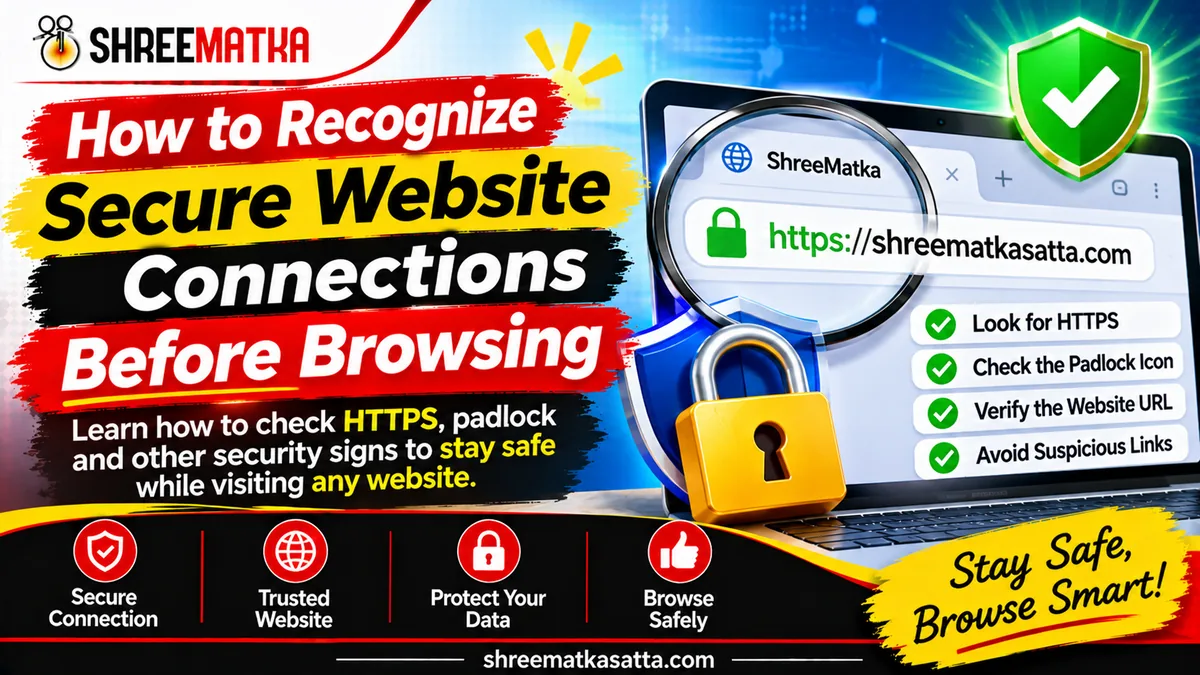
Before browsing an unfamiliar website, take a moment to check its address, connection security, and requests for personal information. Learn how to recognize common warning signs and make safer decisions online.
Table of Contents
- 1. Check the Website Address First
- 2. Understand What HTTPS Actually Means
- 3. Pay Attention to Browser Security Warnings
- 4. Be Careful With Personal Information Requests
- 5. Look for Signs That the Website May Be Suspicious
- 6. Check the Website's Information and Contact Details
- 7. Use Your Browser and Device Carefully
- 8. A Quick Safety Check Before You Browse
- Conclusion
- Frequently Asked Questions
1. Check the Website Address First
One of the easiest approaches to begin checking a website is to study its scope. A website generally starts with either HTTP or HTTPS. HTTPS suggests that the relationship among your browser and the internet site is encrypted, helping shield facts exchanged throughout the connection.
Look for the padlock or connection statistics indicator close to the website to deal with. The actual look may also fluctuate depending on your browser.
It is also worth checking the spelling of the domain name. Some fraudulent websites use addresses that appear almost identical to those of familiar websites, with small adjustments in spelling, more characters, or uncommon endings.
Before continuing, ask yourself:
- Does the address match the website I am supposed to go to?
- Are there any sudden spelling modifications?
- Does the browser indicate that the relationship is secure?
- Did I reach the web page through a sudden link or message?
These brief tests will let you spot a few not unusual caution symptoms before surfing further.
2. Understand What HTTPS Actually Means
Seeing HTTPS in a website address is a useful signal, but it ought to not be handled as a guarantee that the website itself is genuine.
HTTPS encrypts the relationship, making it harder for other events to examine records whilst it travels among your browser and the website. It additionally enables guard against certain sorts of connection tampering.
However, fraudulent websites can also use HTTPS. A scam internet site may also have an encrypted connection whilst still trying to accumulate personal facts or mislead traffic.
For this purpose, a secure matka internet site ought to now not be judged by HTTPS alone. Check the area call, evaluate the internet site's behaviour, and be cautious about what information it asks you to provide. Think of HTTPS as one safety check in preference to proof that each part of a website may be trusted.
3. Pay Attention to Browser Security Warnings
Browsers every so often show warnings whilst an internet site has certificate issues, a hazardous connection, or different capability safety worries.
You may see a message announcing that the connection isn't personal or that the website's protection certificates can't be confirmed. The genuine wording relies upon the browser and the problem detected.
If you come upon this kind of warning, do not forget about it just to open the page. Avoid entering passwords, price information, or other sensitive information until the issue has been understood. If you reached the internet site via a link, check the cope cautiously and attempt navigating to the supposed website the usage of its known, correctly spelled address.
A warning does not continually mean that an internet site is intentionally harmful, but it is a good motive to pause as opposed to proceeding automatically.
4. Be Careful With Personal Information Requests
An internet site may additionally ask visitors to provide data for extraordinary motives, but not every request must be accepted without question.
Be particularly careful if a page asks for passwords, banking info, price information, identification files, or one-time passwords (OTPs) without a clear and legitimate cause.
For example, a surprising message claiming that your account could be blocked except your percentage of an OTP should be handled with suspicion. Never share an OTP with someone who contacts you unexpectedly, and do not enter touchy records sincerely due to the fact a website appears professional.
Before providing any details, don't forget whether or not the facts are sincerely important and whether you accept as true with the website and the cause of the request. When unsure, close the web page and confirm the request through an independently confirmed source.
5. Look for Signs That the Website May Be Suspicious
Some warning symptoms grow to be obviously most effective when you begin surfing. The page may contain misleading messages, surprising redirects, or repeated pop-ups. S.A.That make it hard to go away.
Other things to watch for encompass:
- Unusual domain names: The deal carries greater phrases, misspellings, or characters that don't suit the anticipated website.
- Unexpected downloads: The web page asks you to download an unexpected document or install an unknown utility.
- Pressure methods: Messages declare that you ought to act straight away or risk losing admission to.
- Excessive data requests: The website asks for sensitive info that does not seem vital.
- Repeated redirects: Clicking one link takes you through several unrelated pages.
One sign by myself might not set up that an internet site is fraudulent, however several caution signs collectively deserve interest. Avoid clicking unexpected pop-ups or downloading files really to hold browsing.
6. Check the Website's Information and Contact Details
A website that offers clean records approximately its operator, regulations, and contact methods offers visitors more ways to understand who is responsible for the service.
Depending on the form of the website, you'll be able to review its About page, privacy policy, terms of use, or contact details.
Look for facts that are consistent and applicable. Be careful if the internet site consists of copied-searching textual content, damaged pages, contradictory information, or contact information that cannot be validated.
Keep in mind that those pages can also be copied or fabricated. Their presence on my own does not show that a website is valid. If you are thinking about sharing non-public statistics or making a charge, take more time to verify the website via dependable, unbiased sources.
7. Use Your Browser and Device Carefully
Website protection also depends on the way you browse. Even a valid website can become a threat if you download unknown files, use previous software, or enter touchy information on a compromised tool.
A few basic behaviors can assist:
- Keep your browser and operating system up to date.
- Use strong, unique passwords for distinct accounts.
- Enable multi-factor authentication where available.
- Avoid getting into sensitive data over untrusted public Wi-Fi until you have suitable protection.
- Do not install unusual browser extensions or applications simply due to the fact an internet site recommends them.
- Close suspicious tabs instead of interacting with unexpected pop-ups.
These behaviors are beneficial throughout all types of websites, not just chart-associated pages.
8. A Quick Safety Check Before You Browse
Before persevering with a surprising internet site, take some seconds to check the basics.
- Confirm the address: Make sure the domain is spelled correctly.
- Check the connection: Look for HTTPS and review any browser safety warnings.
- Watch the web page behaviour: Be cautious of sudden redirects, pop-ups, or downloads.
- Review records requests: Avoid sharing sensitive details unless the reason is apparent and legitimate.
- Verify when necessary: Use a trusted, unbiased source if you are uncertain whether the website is genuine.
These steps cannot do away with each online chance, but they permit you to keep away from unusual errors and make more informed surfing choices.
Conclusion
Checking a website's security no longer must be complicated. Start by reviewing the domain, being attentive to browser warnings, and being careful with sudden requests for personal information.
When comparing a secure matka website, recall that HTTPS is only one part of the picture. The internet site's identity, behaviour, and handling of data matter too. If something feels unusual, it's far better to pause and look into it than to maintain it without checking.
Browse safety through making those simple assessments a part of your ordinary online routine.
Frequently Asked Questions
How can I inform whether a website connection is stable?
Check whether or not the address uses HTTPS and assess the connection statistics provided via your browser. Also pay attention to security warnings and ensure the domain is the one you intended to go to.
Does HTTPS imply a website is completely secure?
No. HTTPS encrypts the connection; however, fraudulent websites can also use it. You have to still check the website and be cautious with private records.
What ought to I do if my browser says a connection isn't personal?
Avoid going to the website or coming into touchy information. Check to cope with mistakes and strive once more only once you apprehend and resolve the warning.
Is it secure to go into private details on any website with a padlock?
Not necessarily. The padlock or connection indicator pertains to the relationship, not the honesty of the website operator. Only provide personal information if you have a legitimate cause and consider the destination.
What is the biggest caution sign of a suspicious internet site?
There isn't any unmarried warning sign that identifies every dangerous website. Misspelled domains, browser warnings, surprising downloads, pressure processes, and unnecessary requests for sensitive records are all reasons to be cautious.
Comments (0)
Loading comments...