
How Internal Links Connect Related Chart and Result Pages
When an internet site includes more than one chart page, historical statistics, and academic guides, traffic needs an easy way to transport between associated statistics. Without beneficial hyperlinks, they may return to the homepage or repeat the same seek whenever they want to explore every other segment.
Matka internet site internal hyperlinks assist join relevant pages inside the equal website. When placed thoughtfully, these links make it simpler to discover associated subjects, navigate historic information, and understand how extraordinary sections match collectively.
Internal linking also enables website owners to create a greater prepared website online structure. The aim is to connect pages that virtually help each other, in place of adding links surely to grow the variety of clicks.
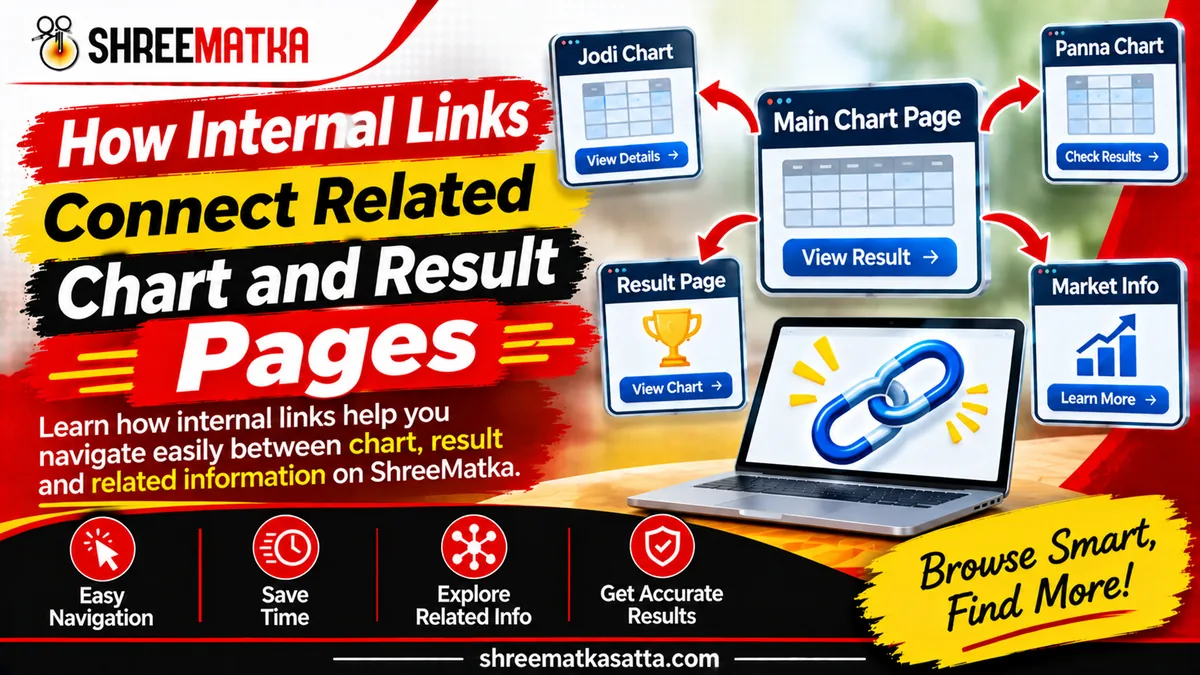
Internal links help visitors move between related chart pages, educational guides, and historical records. Discover how descriptive link text, logical page connections, and relevant links improve website navigation and content discovery.
Table of Contents
- What Are Internal Links?
- 1. Internal Links Help Users Discover Related Information
- 2. Descriptive Link Text Explains Where a Link Leads
- 3. Internal Links Create a Clear Website Structure
- 4. Internal Links Make Historical Information Easier to Navigate
- 5. Internal Linking Can Support Search Engine Discovery
- 6. Relevant Links Can Encourage Further Reading
- Common Internal Linking Problems
- How to Use Internal Links More Effectively
- Conclusion
- Frequently Asked Questions
What Are Internal Links?
An internal link is a clickable link that takes a tourist from one web page to every other web page on the equal internet site.
For example, an academic guide explaining chart terminology may hyperlink to a separate web page describing historic chart information. An ancient facts page would possibly then link to an explanation of date labels or desk formatting.
These connections permit site visitors to transport evidently from one topic to another without leaving the website. Internal links are unique from outside hyperlinks, which direct users to every other internet site. Both may be beneficial, but they serve unique functions.
2. Descriptive Link Text Explains Where a Link Leads
The clickable phrases in a link are often called anchor textual content. Good anchor text gives readers an idea of what they'll find on the destination web page.
Compare these examples:
- Less descriptive: Click right here.
- More descriptive: Learn how ancient chart statistics are prepared.
The 2nd example communicates the cause of the hyperlink earlier than the tourist opens it.
Useful anchor text has to be concise, relevant, and natural. Repeating the identical keyword in every link could make a page sound artificial and might confuse readers about the real purpose of each destination.
For a better browsing experience, use wording that displays the content of the connected page.
3. Internal Links Create a Clear Website Structure
A properly-prepared internet site regularly converts related pages into broader sections. Internal hyperlinks help visitors pass between these sections and understand how man or woman subjects are related.
For instance, a main chart data web page may link to 2 associated sections:
- Chart Guides: Information approximately chart terminology, various chart sorts, and table formats.
- Historical Records: Older statistics prepared by way of date, in conjunction with archived records.
These sections can also hyperlink to applicable articles within their personal classes. For example, a chart manual about terminology might also hyperlink to every other web page explaining the distinction among Jodi and Pana charts.
This structure facilitates site visitors to discover associated facts without having to go back to the homepage or look for every subject matter one at a time. The example above is illustrative. The actual shape of a website depends on how its pages and content material are organized.
5. Internal Linking Can Support Search Engine Discovery
Internal hyperlinks are also useful from a website protection and search engine perspective. They can assist search engines like google find pages and apprehend how unique pieces of content material relate to each other.
For instance, when an established guide hyperlinks to an associated article, that connection can help talk about the connection among the two topics. Descriptive hyperlink text affords extra context about the destination.
However, internal links on my own do no longer assure higher seek scores or more website traffic. Search visibility depends on numerous factors, which include content best, technical accessibility, relevance, and the general usefulness of the website.
The priority ought to be growing significant connections that help each reader and serps recognize the web page's structure.
6. Relevant Links Can Encourage Further Reading
A useful internal link gives visitors a natural next step. Someone reading about chart tables would possibly want to learn the way historical information is organized, whilst a traveller exploring archive dates would possibly want evidence of timestamps.
Placing relevant hyperlinks close to the point in which the associated topic is discussed could make these subsequent steps easier to word.
For instance, a phase explaining archived information could include a contextual hyperlink to a manual about distinguishing up to date information from historical entries.
The link must upload value to the modern-day page. Filling each paragraph with a couple of links can distract readers and make the content tougher to read.
Common Internal Linking Problems
| Problem | Why it matters | Better approach |
|---|---|---|
| Vague link text | Visitors cannot predict the destination. | Use descriptive wording. |
| Links to unrelated topics | Readers may lose their place or become confused. | Link pages with a clear topical connection. |
| Too many links in one section | The content becomes cluttered. | Prioritize the most useful destinations. |
| Broken internal links | Visitors reach unavailable pages. | Check links periodically. |
| Repeated keyword-heavy anchor text | The writing can feel unnatural. | Use varied, accurate descriptions. |
| Important pages with few incoming links | Visitors may struggle to discover them. | Link from relevant, established pages. |
How to Use Internal Links More Effectively
If you're surfing a chart-associated internet site, you can use internal hyperlinks to discover a subject more very well.
Start with the web page you need. Identify the principal topic before following extra links.
Read the hyperlink textual content. Check whether or not it describes data you really want to explore:
- Follow applicable connections: Move to a related manual or archive when it provides beneficial context.
- Check the destination heading: Confirm that the page fits the hyperlink's description.
- Return to the authentic topic when wished: Use the website menu, breadcrumbs, or browser navigation to preserve where you left off.
Website owners can apply the identical concepts by reviewing their content and connecting related pages in places where those connections honestly assist readers.
Conclusion
Internal links join associated chart publications, historical information, and educational pages so traffic can pass through a website more easily. Descriptive link textual content, logical web page relationships, and cautious placement can improve navigation even as helping search engines like google discover and recognize content.
When exploring chart-associated facts, follow hyperlinks that provide beneficial context and take a look at whether each vacation spot suits its description. A thoughtful internal linking shape makes a website greater linked without sacrificing readability or comprehension.
Frequently Asked Questions
What are matka internet site inner links?
They are links that connect one web page to any other inside the same website, inclusive of links between chart courses, historical data, and causes of internet site terminology.
How do internal hyperlinks assist traffic?
They make associated facts less complicated to find out, lessen pointless searching, and provide clean paths among distinct sections of an internet site.
Do internal hyperlinks assist with SEO?
They can help engines like google find out pages and understand relationships between subjects. However, internal linking does not guarantee higher scores or increased site visitors.
How many internal hyperlinks should a page contain?
There isn't any single perfect number for every web page. Include links where they're beneficial, applicable, and helpful to readers instead of including them to attain a hard and fast number.
What makes the inner link text?
Good link text certainly describes the vacation spot, uses natural language, and allows site visitors to determine whether or not the related web page is relevant to their desires.
Comments (0)
Loading comments...